Who Pays When You’re Hurt in a Texas Store?
Slipping on a wet floor. A heavy item falling from an overhead shelf. A poorly lit parking lot where a crime goes unchallenged. These aren’t just accidents — they’re often the result of a store failing to protect the people who walk through its doors.
In Texas, businesses that open their doors to customers take on a legal responsibility to keep those customers safe. When they fall short of that duty and someone gets hurt, the law may hold them accountable. Premises liability law is what governs these situations, and understanding how it works can make a real difference in whether you’re able to recover compensation.
If you’ve been hurt inside a store or on its property, speaking with a Dallas personal injury lawyer can help you understand your options before it’s too late.
Understanding Premises Liability in Texas
What Is Premises Liability?
Premises liability is a branch of personal injury law that holds property owners and occupiers responsible for injuries that occur on their property due to unsafe conditions. In Texas, this area of law is primarily governed by common law principles refined through decades of court decisions.
The core idea is straightforward: if a business invites you onto its property, it owes you a duty of care. That duty doesn’t disappear the moment something goes wrong — it’s ongoing, and it comes with real obligations.
Under Texas law, customers are classified as invitees — people who enter a property with the owner’s permission and for the owner’s benefit (usually commercial). This is the highest duty of care recognized under Texas premises liability law. It’s a stronger protection than what’s afforded to licensees (like social guests) or trespassers.
📌 Key distinction: As a customer, you’re an invitee under Texas law. That means the store owes you more than just a warning — it’s required to actively inspect, identify, and address hazards on its property.
Duty of Care Owed by Stores
A retail store’s duty of care includes several concrete obligations:
- Regularly inspecting the premises for dangerous conditions
- Fixing hazards within a reasonable time after they’re discovered or should have been discovered
- Warning customers of known dangers that can’t be immediately fixed
- Maintaining adequate lighting, especially in parking lots and stairwells
- Training staff to identify and respond to safety issues
This duty applies to the store itself as well as its parking lot, entryways, restrooms, and any other areas customers are expected to access.
When Is a Store Liable for an Injury?
Negligence Explained
Liability doesn’t automatically follow from an injury. A store is only legally responsible if it was negligent — meaning it failed to meet its duty of care, and that failure caused your injury.
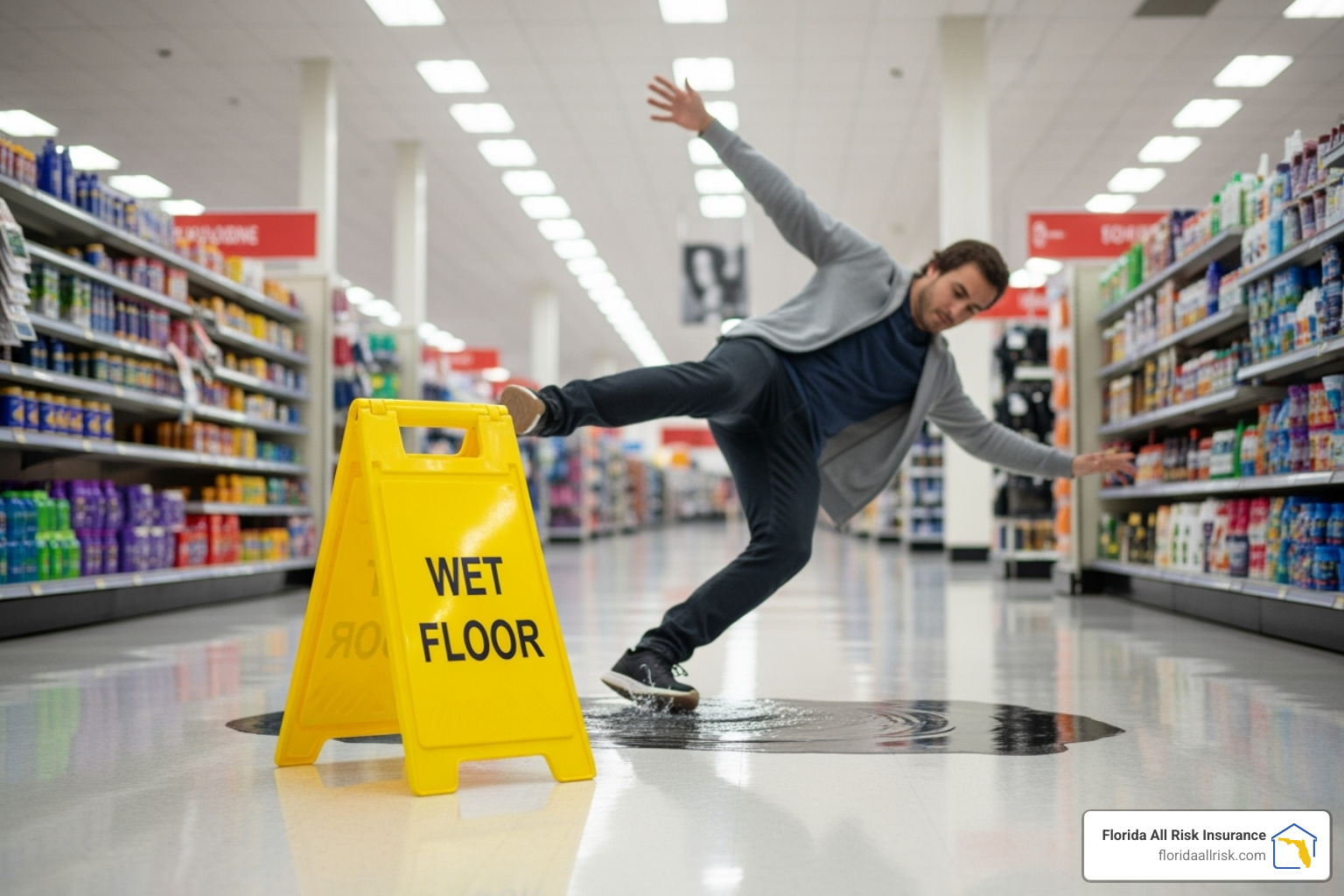
Consider this scenario: A grocery store employee mops the floor during peak shopping hours and doesn’t put up a wet floor sign. A customer rounds the corner, slips, and breaks their wrist. The store knew the floor was wet, failed to warn anyone, and that failure directly caused a preventable injury. That’s negligence.
Now consider a different scenario: A customer spills their own coffee, and another shopper slips on it 30 seconds later before any employee could reasonably have noticed. In that case, proving negligence becomes much harder.
The difference comes down to what the store knew or should have known — and what it did (or didn’t do) about it.
Key Elements You Must Prove
To succeed with a premises liability claim in Texas, you generally need to establish four things:
| Element | What You Must Show |
|---|---|
| Duty of Care | The store owed you a legal duty as an invitee |
| Breach | The store failed to meet that duty |
| Causation | That failure directly caused your injury |
| Damages | You suffered real, compensable harm |
All four elements must be present. Even if a store was clearly negligent, if you can’t demonstrate actual damages — medical bills, lost income, pain — a claim may not hold up.
Common Store Accidents That Lead to Liability
Premises liability claims can arise from a wide range of incidents. These are the most common:
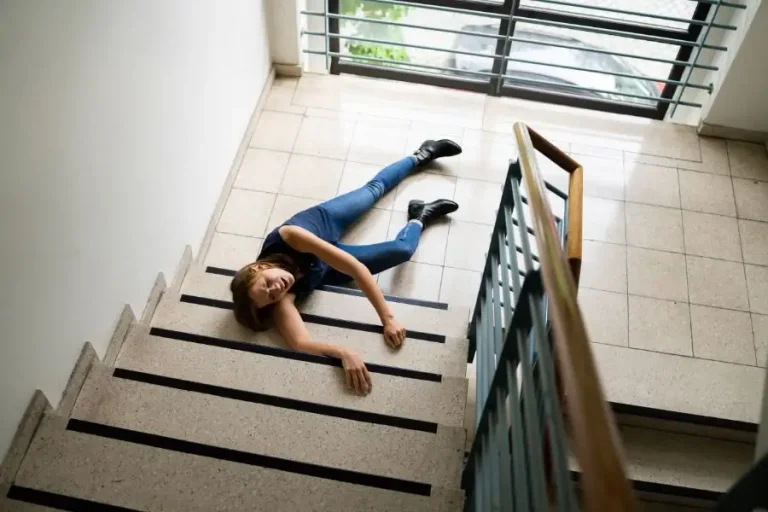
🔹 Slip and fall accidents are the leading cause of store injury claims in Texas. Wet floors, freshly waxed surfaces, spilled liquids, and tracked-in rainwater all present serious hazards when not promptly addressed or marked.
🔹 Falling merchandise occurs when products are stacked too high, shelves are overloaded, or displays are poorly secured. A can falling from an eye-level shelf can cause serious head or neck injuries.
🔹 Poor lighting in parking lots, stairwells, and back areas of stores can mask hazards and, in some cases, create conditions where criminal acts go unseen.
🔹 Broken or uneven flooring — cracked tiles, torn carpet, raised thresholds, or broken steps — can cause trips and falls that result in serious orthopedic injuries.
🔹 Negligent security may give rise to a claim if a store knew (or should have known) about a pattern of criminal activity on its property and failed to take reasonable steps to protect customers — such as failing to maintain adequate lighting, security personnel, or functioning surveillance systems.
If you’ve been injured in any of these circumstances, you may be entitled to compensation. Learn more about what to expect with a slip and fall settlement in Texas.
Situations Where a Store May NOT Be Liable
Texas law doesn’t side automatically with injured customers. There are legitimate defenses stores can raise, and understanding them helps set realistic expectations.
Open and obvious hazards. If a danger was clearly visible and a reasonable person would have noticed and avoided it, a store may argue it had no duty to warn you about it. For example, a bright orange construction cone placed next to a floor display that’s under repair.
Customer negligence. If your own actions contributed to the accident — running in an aisle, ignoring visible warnings, or using a product in a way it wasn’t intended — a store may argue you share responsibility.
No reasonable time to act. If a hazard was created moments before you were injured and the store had no realistic chance to discover and address it, liability may not attach. This often comes down to how long the hazard existed and whether staff should have noticed it on routine inspection.
These defenses are frequently raised by store insurers and their legal teams. An attorney can help you respond to them effectively.
What to Do After an Injury in a Store
Step-by-Step Guidance
What you do in the hours and days following a store injury can significantly affect your ability to recover compensation. Take these steps as soon as you’re physically able:
- Report the incident. Notify a store manager immediately and ask them to fill out an incident report. Get a copy if possible, or photograph it.
- Document everything. Take photos or video of the hazard, your injuries, and the surrounding area. Note the time, date, and any visible conditions (wet floor without a sign, broken shelf, etc.).
- Identify witnesses. If anyone saw what happened, get their name and contact information. Third-party witness testimony can be powerful evidence.
- Seek medical attention promptly. Even if you feel okay, some injuries — especially soft tissue damage and concussions — don’t present symptoms immediately. A medical record created close in time to the incident is critical evidence.
- Avoid giving statements to insurers. Store insurance adjusters may contact you quickly. Their job is to minimize the payout, not protect your interests. Politely decline until you’ve spoken with an attorney.
- Contact a personal injury attorney. An experienced lawyer can preserve evidence, evaluate your claim, and handle all communications with the store and its insurer before it’s too late.
What Compensation Can You Recover?
Texas law allows injured customers to pursue several categories of damages:
- Medical expenses — past and future treatment, surgery, physical therapy, prescription medications
- Lost wages — income lost while recovering, including self-employment income
- Pain and suffering — physical pain, emotional distress, and reduced quality of life
- Future damages — ongoing care needs, loss of earning capacity, long-term disability
The value of a claim depends on the severity of the injury, how clearly liability can be established, and the strength of the evidence. Our personal injury lawyers in Dallas and Fort Worth can help assess what your specific situation may be worth.
How Texas Law Impacts Your Claim
Modified Comparative Fault Rule
Texas follows a modified comparative fault rule (also known as proportionate responsibility), codified under Texas Civil Practice and Remedies Code § 33.001. This rule has two important consequences:
- Your compensation is reduced by your percentage of fault. If you’re found 20% responsible for the accident, your damages are reduced by 20%.
- If you’re found more than 50% at fault, you’re barred from recovering any damages at all.
This is the 51% bar rule, and it’s why stores and their insurers often aggressively try to shift blame onto injured customers. Having legal representation levels that playing field.
Statute of Limitations
In Texas, you generally have two years from the date of the injury to file a premises liability lawsuit. This deadline is set by the Texas Civil Practice and Remedies Code § 16.003. Missing it almost always means losing your right to sue, regardless of how strong your case may be.
Some exceptions exist — for minors, for instance — but they’re narrow. Don’t wait.

How a Texas Personal Injury Lawyer Can Help
Premises liability cases can seem simple on the surface but become complicated quickly. Stores have insurance companies and experienced defense attorneys working on their behalf from day one. You deserve the same level of advocacy.
A Texas personal injury lawyer will:
- Investigate the scene and gather physical evidence before it disappears
- Obtain surveillance footage, incident reports, and inspection logs
- Work with medical experts to document the full extent of your injuries and future care needs
- Handle all insurer communications to prevent your words from being used against you
- Negotiate a fair settlement — or take your case to trial if necessary
The goal is to make sure the full value of your claim is on the table, not just the amount the insurer initially offers.
Frequently Asked Questions
Can I sue a store for slipping and falling in Texas?
Yes, if the store’s negligence caused the hazard that led to your fall. You’ll need to show the store was aware of the dangerous condition — or should have been — and failed to fix it or warn you. A slip and fall attorney can help evaluate whether your situation meets the legal standard.
What if the store says the accident was my fault?
Texas’s modified comparative fault rule means you can still recover damages even if you were partially at fault — as long as your share of responsibility is 50% or less. The store’s insurer may exaggerate your role in the accident to reduce their payout. Don’t accept their framing without speaking to an attorney first.
Do I need a lawyer for a store injury claim?
You’re not legally required to have one, but the reality is that claimants with legal representation routinely recover more than those who go it alone. Insurers are skilled negotiators who know how to minimize payouts. An experienced Texas personal injury lawyer knows how to push back.