
What Counts as a Personal Injury Case in Texas?
If you’ve been hurt in an accident, you might be wondering whether you have grounds to seek compensation. Not every injury qualifies as a personal injury case under Texas law. Personal injury cases hinge on one key principle: negligence. When someone else’s careless or reckless actions cause you harm, you may be entitled to compensation for your medical bills, lost income, and pain and suffering.
Because proving negligence and damages can be complex, speaking with an experienced Personal injury lawyer Plano can help you understand whether your situation qualifies for a claim and what steps to take next.
What Is a Personal Injury Case Under Texas Law?
A personal injury case is a civil legal dispute where one party seeks financial compensation from another for injuries caused by negligence or intentional misconduct. Unlike criminal cases—where the state prosecutes someone for breaking the law—personal injury claims are filed by injured individuals (plaintiffs) against the party responsible for their harm (defendants).
Under Texas law, these cases fall under tort law, which addresses wrongful acts that cause harm to others. The injured party must prove that another person or entity acted negligently and that this negligence directly resulted in measurable damages.
Personal injury cases can involve individuals, businesses, government entities, or even product manufacturers. What matters is proving that someone else’s actions—or failure to act—breached their legal duty to keep you safe.
The 4 Elements Required for a Valid Personal Injury Claim in Texas
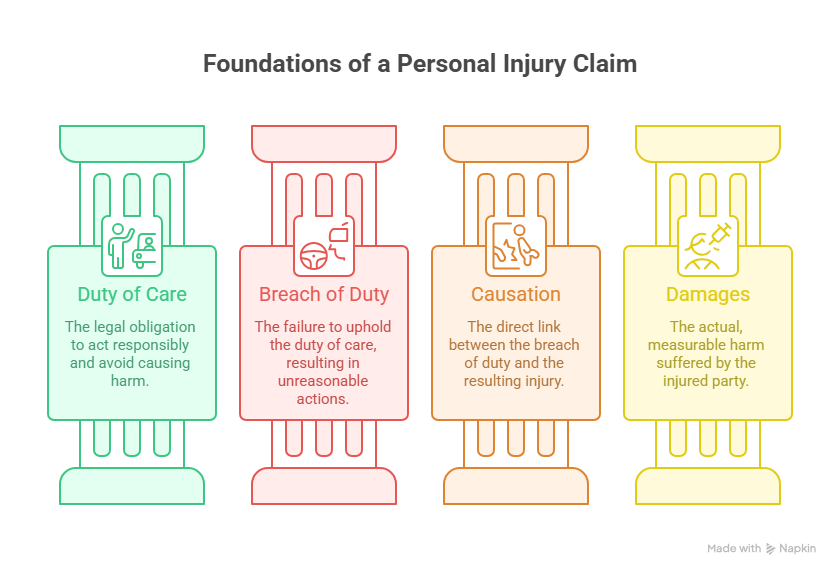
Texas courts require you to prove four specific elements to establish a valid personal injury case. Missing even one element can derail your claim entirely. Here’s what you need to demonstrate:
1. Duty of Care
Every person owes others a legal obligation to act responsibly and avoid causing harm. This duty varies depending on the situation. Drivers must follow traffic laws and operate vehicles safely. Property owners must maintain premises free from dangerous hazards. Doctors must provide care that meets accepted medical standards. Manufacturers must ensure their products are safe for consumer use.
The duty of care establishes the baseline expectation for reasonable behavior. For instance, a grocery store owner has a duty to promptly clean up spills that could cause customers to slip and fall. A nurse has a duty to administer the correct medication to patients. Without establishing this foundational duty, there’s no case.
2. Breach of Duty
Once you’ve established that a duty existed, you must show the defendant failed to uphold it. A breach occurs when someone acts unreasonably or fails to exercise expected care.
Common examples include a driver texting while behind the wheel, a property owner ignoring a broken staircase railing, or a surgeon operating on the wrong body part.
3. Causation
This element requires proving a direct link between the defendant’s breach and your injury. You must demonstrate that their specific actions caused your harm, not a pre-existing condition or unrelated factor. The connection must be clear and supported by evidence.
4. Damages
Finally, you must have suffered actual, measurable harm. Damages can be physical, financial, or emotional—but they must be documented. This includes medical expenses, lost wages, property damage, ongoing treatment costs, and compensation for pain and suffering.
Texas law recognizes that not all harm is visible. Emotional distress, loss of enjoyment in activities, and reduced quality of life all count as valid damages. However, you need evidence: medical records, bills, pay stubs, expert testimony, and documentation of how the injury has impacted your daily life.
Common Types of Personal Injury Cases in Texas
Personal injury law covers a wide range of accidents and injuries. Here are the most common case types we see across Texas:
- Car accidents remain the leading cause of personal injury claims. Whether it’s a rear-end collision, T-bone crash, or multi-vehicle pileup, negligent drivers cause thousands of injuries annually. These cases often involve insurance disputes and questions about fault.
- Truck accidents typically result in more severe injuries due to the size and weight of commercial vehicles. These cases can be complex, involving multiple parties such as trucking companies, maintenance contractors, and cargo loaders.
- Motorcycle accidents frequently lead to catastrophic injuries because riders lack the protective barriers of enclosed vehicles. Helmet laws and visibility issues often play significant roles in these claims.
- Slip and fall accidents occur when property owners fail to maintain safe premises. Wet floors, uneven sidewalks, poor lighting, and unmarked hazards can all lead to serious injuries—especially for older adults.
- Workplace injuries may qualify as personal injury cases when third parties (not your employer) cause harm. While workers’ compensation typically covers on-the-job accidents, you can file a personal injury lawsuit if a contractor, defective equipment manufacturer, or another entity caused your injury.
- Medical malpractice cases arise when healthcare providers deviate from accepted standards of care. Misdiagnosis, surgical errors, medication mistakes, and birth injuries fall into this category.
- Product liability claims involve defective or dangerous products that cause injury. Manufacturers, distributors, and retailers can all be held liable when products fail to perform safely as intended.
- Dog bites are covered under Texas’s “one bite rule,” which means owners may be liable if they knew or should have known their dog had aggressive tendencies.
- Wrongful death claims allow family members to seek compensation when negligence causes a loved one’s death. These emotionally devastating cases require compassionate legal guidance alongside aggressive advocacy.
If you’ve been injured in a car accident, connecting with a Plano personal injury lawyer or McKinney personal injury attorney can help you understand your options and build a strong case.
What Does NOT Qualify as a Personal Injury Case?
Understanding what doesn’t count as a personal injury case is just as important as knowing what does. This knowledge helps you set realistic expectations and avoid wasting time pursuing claims that won’t succeed.
- Accidents without negligence don’t qualify. If you trip over your own feet on a perfectly maintained sidewalk, there’s no one else to hold responsible. Personal injury law requires proving another party’s wrongful conduct.
- Minor incidents with no damages also fail to meet the threshold. If you’re in a fender bender but walk away uninjured with no property damage, you have nothing to recover.
- Cases filed after the statute of limitations expires are time-barred. Texas law imposes strict deadlines, and missing them means losing your right to compensation entirely.
- Situations where you’re primarily at fault won’t result in recovery. If you’re found to be 51% or more responsible for causing your own injury, you cannot collect damages.
How Texas Comparative Negligence Affects Your Case
Texas uses a modified comparative negligence system with a 51% bar rule. This legal principle determines how much compensation you can recover when you share some blame for your accident.
Here’s how it works: if you’re found to be 50% or less at fault, you can still recover damages—but your compensation will be reduced by your percentage of fault. However, if you’re 51% or more responsible, you’re barred from recovering anything.
Hypothetical scenario:
You’re driving through an intersection when another driver runs a red light and hits you. However, investigators determine you were slightly exceeding the speed limit. The jury assigns you 20% fault and the other driver 80% fault. If your total damages equal $100,000, you’ll receive $80,000 (reduced by your 20% share of responsibility).
Now imagine the same accident, but evidence shows you were texting while driving and failed to brake when you had the opportunity. The jury finds you 60% at fault. Even though the other driver ran a red light, you recover nothing because you exceeded the 51% threshold.
This system creates significant stakes during settlement negotiations and trial. Insurance companies will aggressively argue that you bear more fault to reduce their liability. Early legal representation matters—preserving evidence and building a strong case from the start can make the difference between full compensation and walking away empty-handed.
What Damages Can You Recover in a Texas Personal Injury Case?
Texas law allows injured parties to seek several categories of damages, depending on the circumstances of their case.
Economic Damages
These are quantifiable financial losses with clear dollar values:
Medical expenses include emergency room visits, hospital stays, surgeries, prescription medications, physical therapy, assistive devices, and ongoing treatment. Keep every medical bill and receipt—they’re critical evidence.
Lost wages compensate you for income you couldn’t earn while recovering. This includes salary, hourly wages, commissions, and bonuses. Self-employed individuals can recover for lost business income.
Future earning capacity becomes relevant when your injuries prevent you from returning to your previous job or working at full capacity. Vocational experts often testify about your reduced ability to earn income over your remaining work life.
Non-Economic Damages
These address intangible losses that profoundly impact your quality of life:
Pain and suffering encompasses the physical discomfort and ongoing pain you experience due to your injuries. Chronic pain, permanent disability, and disfigurement all fall under this category.
Emotional distress compensates for psychological harm such as anxiety, depression, and post-traumatic stress disorder. Therapy records and expert testimony help establish these damages.
Loss of consortium applies in cases where injuries damage your relationship with your spouse, affecting companionship, affection, and intimacy.
Punitive Damages
Texas courts award punitive damages only in cases involving gross negligence, malice, or fraud. These damages are meant to punish the defendant and deter similar conduct in the future. They’re relatively rare and typically apply in cases like drunk driving accidents or intentional harm.
The total compensation you might receive varies dramatically based on injury severity, available evidence, and the skill of your legal representation. To get a better sense of potential outcomes, read more about the average personal injury settlement in Texas.
How Long Do You Have to File a Personal Injury Claim in Texas?
⏰ Time is critical. Texas imposes a two-year statute of limitations on most personal injury cases, starting from the date of your injury. Miss this deadline, and courts will dismiss your case.
According to the Texas Civil Practice and Remedies Code § 16.003, you have exactly two years to file your lawsuit. This timeframe applies to car accidents, slip and falls, medical malpractice, and most other personal injury claims.
However, several important exceptions exist:
Claims against government entities have much shorter deadlines. If a city vehicle, county employee, or state agency caused your injury, you may need to file a notice of claim within six months. These cases involve additional procedural requirements that can trap the unwary.
Cases involving minors pause the statute of limitations until the child turns 18, then the two-year clock begins. This protects children’s rights when parents fail to act on their behalf.
The discovery rule applies when you couldn’t have reasonably known about your injury right away. Some medical malpractice cases and toxic exposure claims fall into this category. The clock starts when you discover—or reasonably should have discovered—the injury.
Even with these exceptions, waiting is dangerous. Evidence disappears, witnesses forget details, and your memory fades. Security camera footage gets deleted after 30 to 90 days. Accident scenes change. Physical evidence deteriorates.
Insurance companies know these deadlines and use them to their advantage. They’ll delay negotiations, hoping you’ll miss your filing window. Contact a Texas personal injury lawyer as soon as possible after your accident to protect your rights.

How to Know If You Have a Valid Personal Injury Case
You may have a strong personal injury case if:
✅ Someone else’s negligence caused your injury. This means another party acted carelessly, recklessly, or intentionally in a way that violated their duty to keep you safe.
✅ You suffered measurable damages. You’ve incurred medical bills, lost income from work, or experienced documented pain and suffering that has disrupted your life.
✅ You have evidence supporting your claim. Police reports, medical records, witness statements, photographs, video footage, or expert opinions help prove what happened and who’s at fault.
✅ Your case falls within the statute of limitations. You’re still within the two-year filing window (or applicable exception) that Texas law requires.
✅ You bear less than 51% of the fault. Under Texas comparative negligence rules, being mostly responsible for your own injury bars you from recovery.
If you’re checking most of these boxes but feel uncertain, that’s normal. Personal injury law involves nuanced questions that even experienced attorneys must carefully analyze. Factors like insurance policy limits, the defendant’s financial resources, the strength of available evidence, and the credibility of witnesses all influence whether pursuing a claim makes sense.
The best way to know for certain is to speak with a qualified personal injury attorney who can evaluate your specific circumstances and explain your legal options.
When Should You Contact a Texas Personal Injury Lawyer?
Timing matters more than you might think. Here’s why you should reach out to legal professionals sooner rather than later:
Insurance companies mobilize immediately after receiving accident reports. Their adjusters and investigators start building defenses to minimize payouts. You need someone who understands their tactics.
Evidence disappears quickly. Surveillance footage gets recorded over, witnesses move away or forget details, and accident scenes return to normal. An attorney can issue preservation letters, hire investigators, and secure evidence before it’s lost.
Early statements can haunt you. Insurance adjusters often call within days of an accident, asking leading questions designed to trap you into admitting fault or downplaying injuries. Having an attorney field these communications protects you.
Your injuries may be more serious than they first appear. Soft tissue injuries, traumatic brain injuries, and internal damage don’t always show immediate symptoms. Accepting an early settlement before understanding the full extent of your injuries can leave you without recourse.
Legal representation improves outcomes. Studies consistently show that represented claimants recover significantly higher settlements than those who handle claims alone. Lawyers know how to value cases accurately, negotiate effectively, and take cases to trial when necessary.
Don’t wait until you’ve made costly mistakes or let critical deadlines slip by. Most personal injury attorneys offer free consultations to discuss your case and explain your options. Reach out to our network of experienced Texas personal injury lawyers today.
Frequently Asked Questions
What qualifies as pain and suffering in Texas?
Pain and suffering includes physical discomfort, emotional distress, anxiety, depression, loss of enjoyment in life activities, and reduced quality of life resulting from your injuries.
Texas law recognizes these non-economic damages even when they’re difficult to quantify. Medical records, therapy notes, personal journals, and testimony from you, family members, and medical experts help establish these damages.
Can I file a claim if I was partially at fault?
Yes, as long as you’re 50% or less responsible for causing your injuries. Texas uses modified comparative negligence with a 51% bar rule.
Your compensation will be reduced by your percentage of fault, but you can still recover damages. For example, if you’re 30% at fault and your damages total $100,000, you’ll receive $70,000. If you’re 51% or more at fault, you cannot recover anything.
How much is a personal injury case worth in Texas?
Case values vary dramatically based on injury severity, available insurance coverage, economic losses, non-economic damages, and the strength of evidence.
Minor soft tissue injuries might settle for a few thousand dollars, while catastrophic injuries resulting in permanent disability can be worth millions. An experienced attorney can evaluate your specific circumstances and provide a realistic estimate of your case’s potential value.
Do I need a lawyer for a minor injury?
It depends on your situation. If your injuries required minimal medical treatment, you missed no work, and the insurance company offers a fair settlement quickly, you might handle the claim yourself.
However, even seemingly minor injuries can develop complications. Insurance companies often make lowball offers hoping you’ll accept before realizing the full extent of your damages. A free consultation with an attorney costs nothing and can help you understand whether representation would benefit your case.